A contractor account is a repeat-billing arrangement, not a different dumpster, the 20-yard roll-off that holds roughly 8 pickup loads is the same $795 bin a homeowner rents, except a commercial account locks that flat…
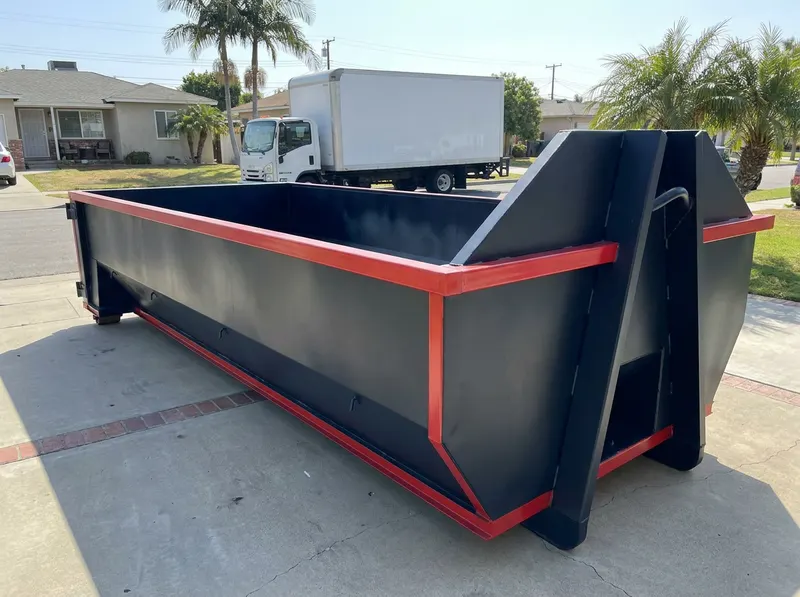
A contractor account is a repeat-billing arrangement, not a different dumpster, the 20-yard roll-off that holds roughly 8 pickup loads is the same $795 bin a homeowner rents, except a commercial account locks that flat rate across every pour, tear-off, and tenant improvement on the books. The crucial non-obvious fact: the $695-to-$995 price is all-in, so unlike bins quoted with a low base and a separate per-ton weight charge, there is no overage invoice after the scale ticket. A roofing crew stripping a 30-square roof in Eagle Rock fills a 40-yard ($995) with shingle debris and pays the posted number, the heavy load does not trigger a tonnage bill. Dumpster rental is load-it-yourself service; the account covers delivery, placement, and haul-off, and the crew loads the bin, which keeps the flat price flat.
Sizing follows the job. A 10-yard ($695) holds about 4 pickup loads and suits a single bathroom gut or a small punch-list cleanout in Silver Lake; a 15-yard ($750) and 20-yard ($795) handle kitchen remodels and multi-room tenant work; a 30-yard ($895) fits a whole-house demo in Highland Park; and a 40-yard ($995) handles commercial framing scrap and large tear-offs. If-then for crews: if the debris is dense, concrete, brick, dirt, or tile, a 10-yard or 15-yard is the right call because weight fills before volume does; if the debris is bulky and light like framing lumber or roofing, step up to the 30-yard or 40-yard. Mixed clean concrete and asphalt should be kept in its own bin and sorted per the California C&D diversion rules many LA permits require, in line with CalRecycle construction and demolition debris guidance and the city's own LA Sanitation recycling program.
Street placement is where LA logistics decide the day. A bin sitting in a public right-of-way in Boyle Heights or San Pedro needs a permit, while a bin on a private driveway or lot usually does not, our team walks crews through the LA permit path and confirms whether the Los Angeles Department of Transportation requires a sidewalk or roadway occupancy permit for the block. Tight hillside driveways around Mar Vista and Sunland-Tujunga, and loading zones near Sherman Oaks commercial corridors, are handled with the roll-off size matched to the swing room. OSHA jobsite debris-management standards keep walking-working surfaces clear, and keeping a bin on site instead of a growing scrap pile is the practical way to meet that. Here is the sequence: Step 1, call to open the account and list the active sites. Step 2, pick the bin size per job. Step 3, schedule the drop at the placement spot. Step 4, the crew loads over the rental window. Step 5, call for the haul-off or a swap-out, and the flat rate repeats on the next bin.
Contractor accounts fit crews running back-to-back jobs who do not want to re-quote every week; a one-off homeowner remodel does not need an account and can book a single bin at the same flat price. Debris that cannot go in any bin includes household hazardous waste, wet paint, solvents, tires, and refrigerant appliances, these follow EPA hazardous waste handling rules and are diverted separately. Universal waste like fluorescent tubes and batteries from a commercial strip-out follows its own path rather than the roll-off. For heavier demolition, a dust and silica plan under the Cal/OSHA respirable silica standard is worth confirming before the first swing. Keeping loads sorted also lifts a project's diversion rate, which matters where GreenBuilding or LEED construction-waste credits are tracked on the job.
Every job gets a firm, written price after an on-site visit.
Tell us about your contractor & commercial accounts job in Los Angeles and we'll send a clear, written quote, usually the same day.
 Overdrive Dumpster Rental