A construction and demolition bin is self-load, not junk removal: the crew drops the roll-off, you fill it on your own schedule, and the team hauls it to a sorting facility. For most Los Angeles remodels the choice is…
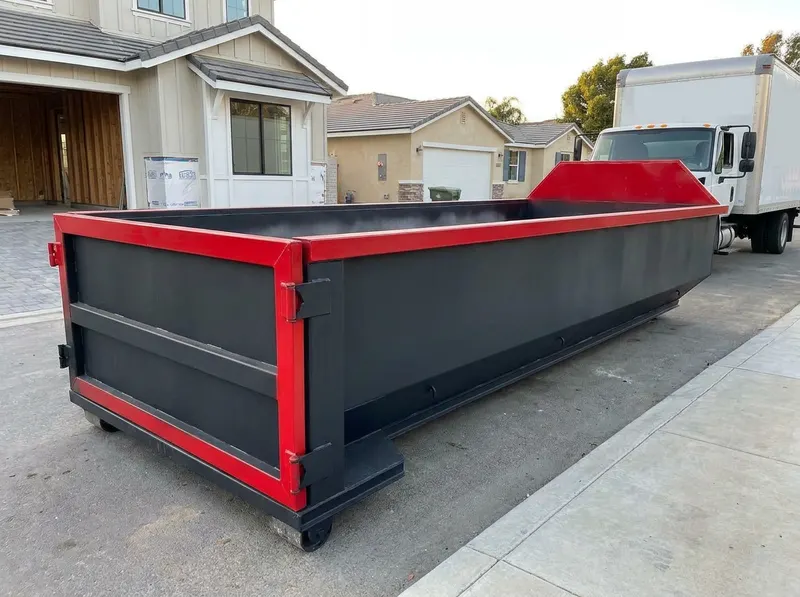
A construction and demolition bin is self-load, not junk removal: the crew drops the roll-off, you fill it on your own schedule, and the team hauls it to a sorting facility. For most Los Angeles remodels the choice is driven by debris weight and driveway space. A 10-yard holds roughly 4 pickup-truck loads and sits short enough for a tight Highland Park or Silver Lake driveway; a 40-yard holds roughly 16 loads and needs a flat, open pad. The trade-off is simple in prose: heavy dense debris like concrete, brick, and tile belongs in the 10-yard or 15-yard because weight fills it before volume does, while light bulky framing and drywall from a full-house gut in Mar Vista or Sherman Oaks fills a 30-yard or 40-yard on volume. If it is a single-bathroom demo in Eagle Rock, the 10-yard at $695 is the honest fit; if it is a roof tear-off in Westchester or a whole-home framing job in Van Nuys, size up so you are not paying for a second haul.
Los Angeles separates construction waste for a reason. The CalRecycle construction and demolition program and the City's own C&D ordinance require covered projects to divert a share of debris from the landfill, which is why clean concrete, clean wood, and metal are worth keeping unmixed in the bin when a job allows it. The EPA sustainable management of C&D materials guidance and Earth911 recycling directory both track where these streams go after pickup. Certain items never ride in a construction bin: household hazardous waste, asbestos, and refrigerant-bearing appliances are handled under separate California rules per the Department of Toxic Substances Control, and jobsite crews should follow OSHA 1926 construction standards when loading heavy debris. Street placement in neighborhoods like Boyle Heights, Sunland-Tujunga, or San Pedro may need a public-works permit; the StreetsLA bureau oversees right-of-way use, and our team can walk you through whether your block needs one or whether the bin fits entirely on private property.
Here is how a rental runs. Step 1, you call (626) 635-3192 and name the job, the debris type, and the drop address. Step 2, the size is matched to your debris, dense material gets a smaller box, bulky gets a larger one. Step 3, the roll-off is delivered, commonly next-day, placed on boards to protect the driveway. Step 4, you load it over your rental window. Step 5, the full bin is hauled to a sorting and recovery facility, and the flat price you were quoted is the price you pay. Weight limits and recycling markets are tracked by the National Waste & Recycling Association and the Solid Waste Association of North America for the industry at large.
Every job gets a firm, written price after an on-site visit.
Tell us about your construction & c&d dumpster rental job in Los Angeles and we'll send a clear, written quote, usually the same day.
 Overdrive Dumpster Rental